
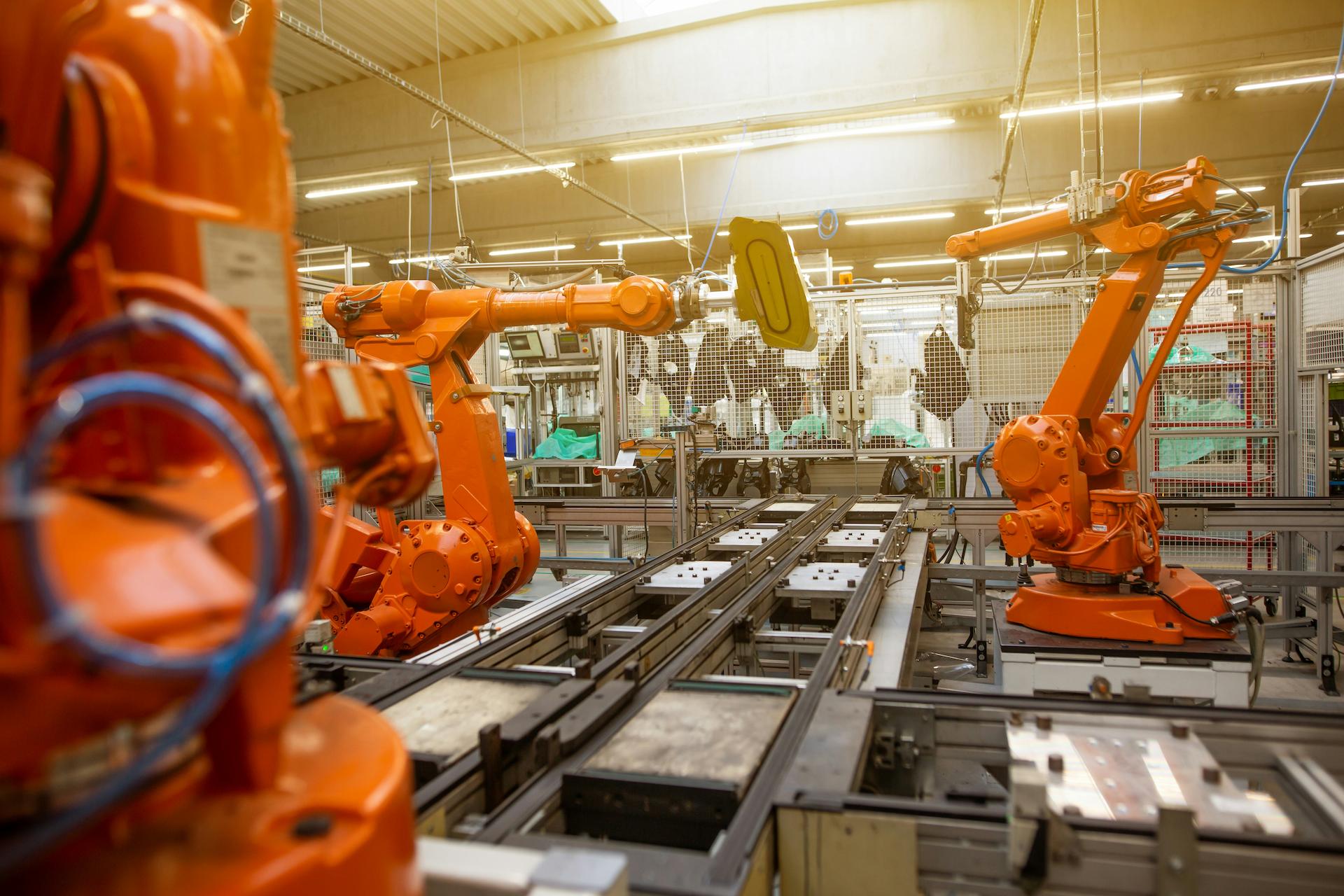
Manufacturing companies are not the first industry most people picture when they think about cybersecurity. That assumption is exactly what makes them a target.
Attackers follow opportunity. Right now, manufacturing represents a significant one. Production environments run on tight margins, tight timelines, and systems that were built for reliability, not security. When those systems go down, the financial and operational consequences are immediate. Attackers know this, and increasingly, they are using it.
This is not a problem exclusive to large industrial enterprises. Small and midsize manufacturers face the same threats with fewer resources to respond. Understanding where the risk comes from and what a practical response looks like is the first step toward building a more secure operation.
Why Manufacturing Is a High-Value Target
Most business owners assume cybercriminals are focused on banks, hospitals, or technology companies. The data tells a different story. Manufacturing has become one of the most targeted sectors, and the reasons are specific.
Modern manufacturing environments combine traditional IT systems, things like email, file servers, and business applications, with operational technology (OT) that controls physical production equipment. These two environments were historically kept separate. As manufacturing has modernized, that separation has narrowed. Machines are networked. Production data flows into business systems. Remote access is common for monitoring and maintenance.
That convergence creates new attack surfaces that many manufacturers have not fully accounted for. An attacker who gains access to the IT network may now have a path toward production systems that would have been unreachable a decade ago.
A few other factors that make manufacturers appealing targets:
- Supply chain exposure. Manufacturers often work within networks of vendors, partners, and customers. Attackers sometimes use a smaller supplier as a stepping stone toward a larger organization, making even modest-sized businesses strategically relevant.
- The economics of downtime. In manufacturing, a production stoppage is costly by the hour. Ransomware is effective in this sector precisely because the pressure to restore operations quickly is so high, creating an incentive to pay rather than recover.
- Older, less hardened systems. Many production environments run on equipment and software that was never designed with modern cybersecurity in mind, and updating it carries its own operational risk.
The Most Common Threats Manufacturers Face
Manufacturing cybersecurity threats tend to fall into a few recurring categories. Knowing them makes it easier to identify where your own environment may be exposed.
- Ransomware. Attackers encrypt critical files or systems and demand payment in exchange for restoration. When production systems are affected, the impact extends far beyond the IT department and can halt output entirely.
- Phishing. This remains the most common entry point for attackers. A single convincing email, and one click from an employee, can provide a foothold inside your network. Both training and technical controls play a role in reducing this risk.
- Remote access vulnerabilities. As manufacturers have expanded remote monitoring, vendor access, and hybrid work arrangements, poorly configured remote access tools have become a frequent target. This is also one of the more straightforward gaps to close.
- Insider threats. Not every incident involves a bad actor from the outside. An employee who mishandles data, reuses weak credentials, or clicks a malicious link can introduce significant risk without any intent to cause harm.
What IT Security in Manufacturing Should Actually Look Like
Strong manufacturing cybersecurity does not require overhauling your entire environment overnight. It requires a structured approach that addresses the most meaningful risks first and builds from there.
A few areas that tend to move the needle most for manufacturers:
- Endpoint protection and patch management. Every device on your network, from workstations to connected machines, should have current protection in place. Unpatched and unprotected endpoints are among the most common entry points and can be addressed through consistent maintenance routines.
- Multi-factor authentication. Adding a second verification step for account access is one of the highest-impact, lowest-cost improvements available. MFA significantly reduces the risk of credential-based attacks, which are among the most frequent.
- Network segmentation. Creating controlled boundaries between IT and OT environments limits how far an attacker can move if they gain access to one part of your network. A well-configured firewall strategy is a core part of making that separation work in practice.
- Employee awareness training. People remain the most frequently targeted element of any organization. Regular, realistic training helps employees recognize threats and understand their role in keeping the business secure.
- Backup and recovery planning. A tested, documented recovery plan is what separates a serious incident from a catastrophic one. This means not just having backups in place, but verifying they work and knowing how to use them under pressure.
The Cost of Waiting
For many manufacturers, security investment gets deferred because production always feels more urgent. That calculation changes quickly after an incident.
The impact of unplanned downtime extends well beyond recovery costs. There is production disruption, customer impact, potential regulatory exposure, and reputational damage that could have been prevented. Cyber insurers are also raising the bar on what coverage requires, meaning businesses that have not addressed basic security hygiene may find their protection limited precisely when they need it most.
The more useful frame is not “can we afford to invest in security” but “can we afford not to.”
A Partner Who Understands the Operational Stakes
Effective IT security in manufacturing requires an understanding of both the technology and the environment it operates in. Production schedules matter. Uptime matters. A security strategy that creates unnecessary friction or disrupts operations is not a good strategy, regardless of how technically sound it looks on paper.
PCI works with manufacturers to build security programs that are practical, proportionate, and built around how your operation actually runs. If you want to understand where your current environment stands and what a realistic improvement path looks like, we are ready to have that conversation.